BECOME A PART OF THE LEGACY OF ACHARYA JAGADIS CHANDRA BOSE
- A HERITAGE MISSION
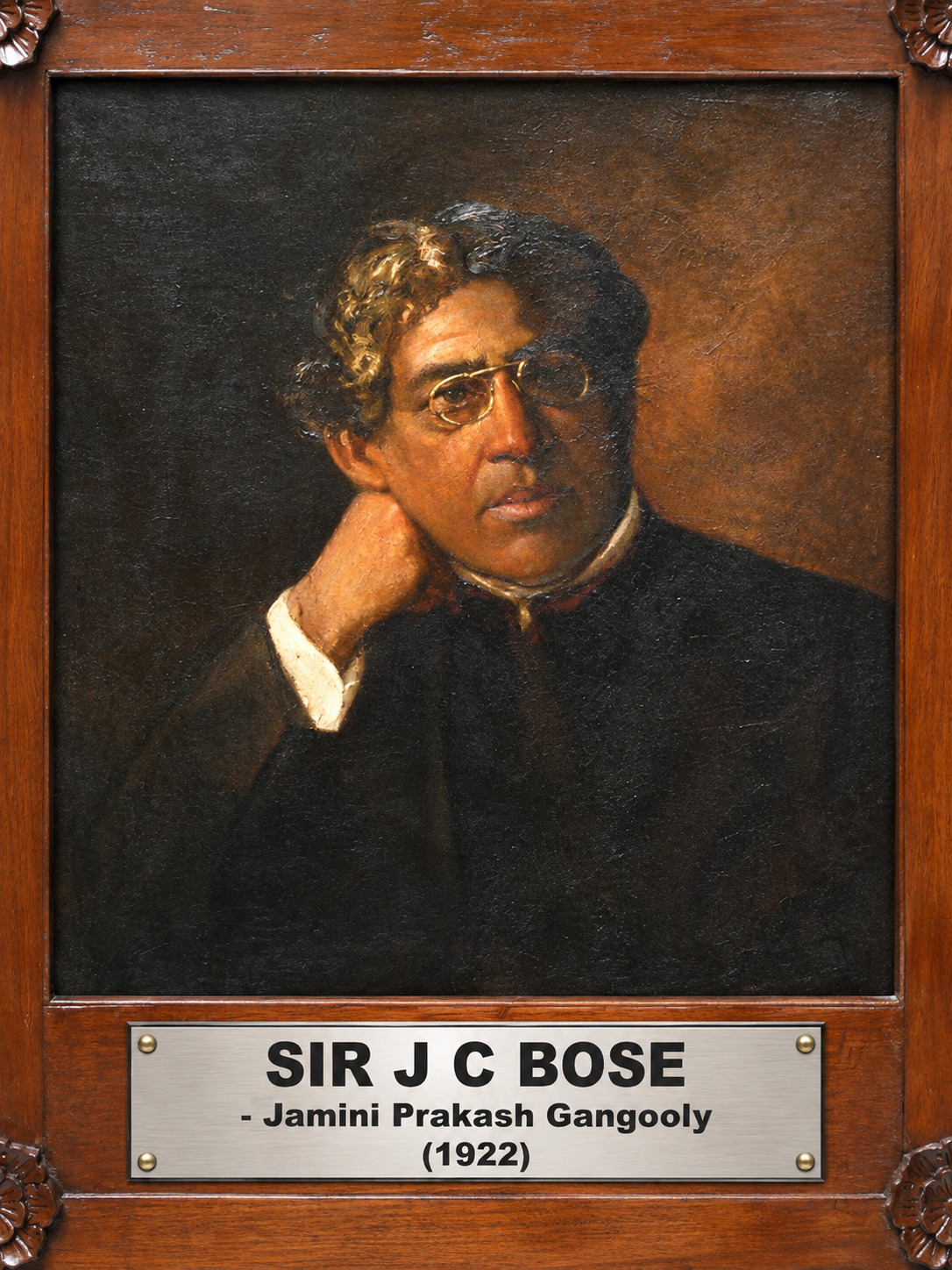
Acharya Jagadis Chandra Bose
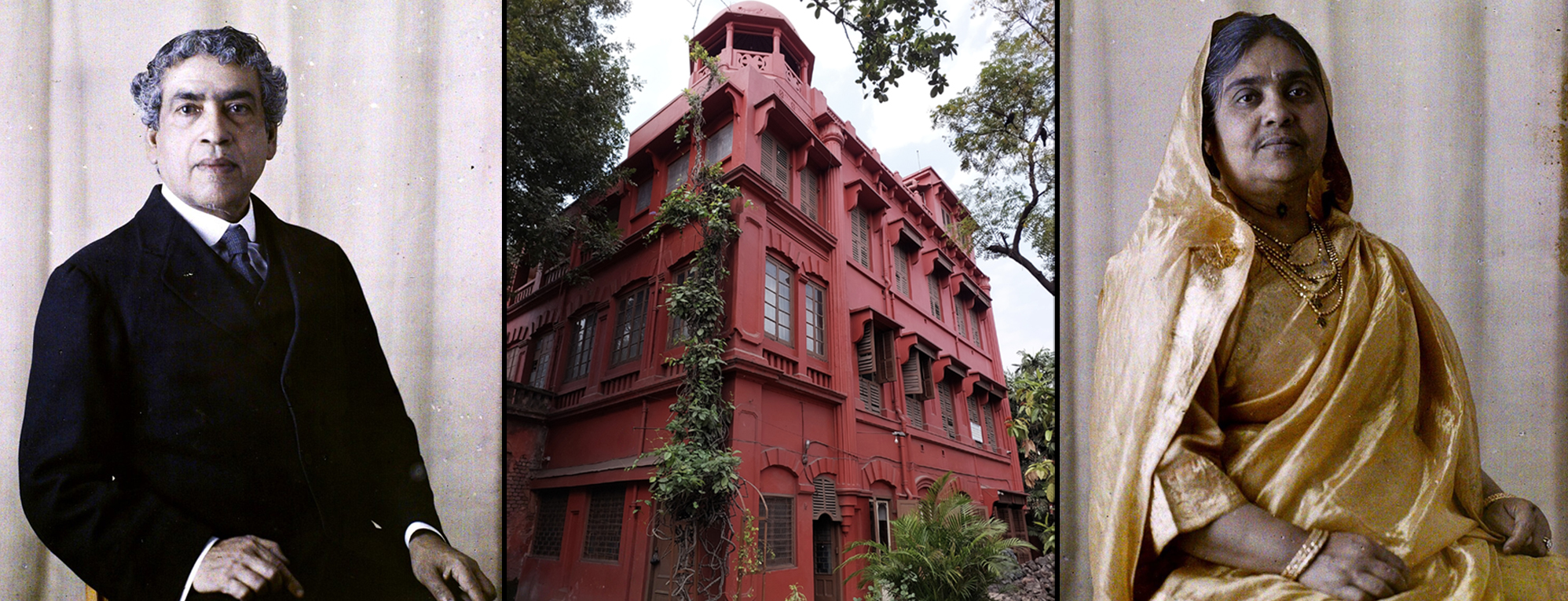
Acharya Jagadis Chandra Bose, a scientist 60 years ahead of his time, created science in India at a time when there was hardly any science and built his own instruments when instrumentation was not heard of. With hardly any resources at his disposal, in the midst of critical working conditions during the critical colonial period, he carried forward his mission of scientific development in India. Bose was not only a leader of Indian scientific renaissance, but also an ardent lover of art and culture, philosopher influenced by philosophy of the Upanishads and Buddhism and patriot who recognized the importance of scientific research in national development.
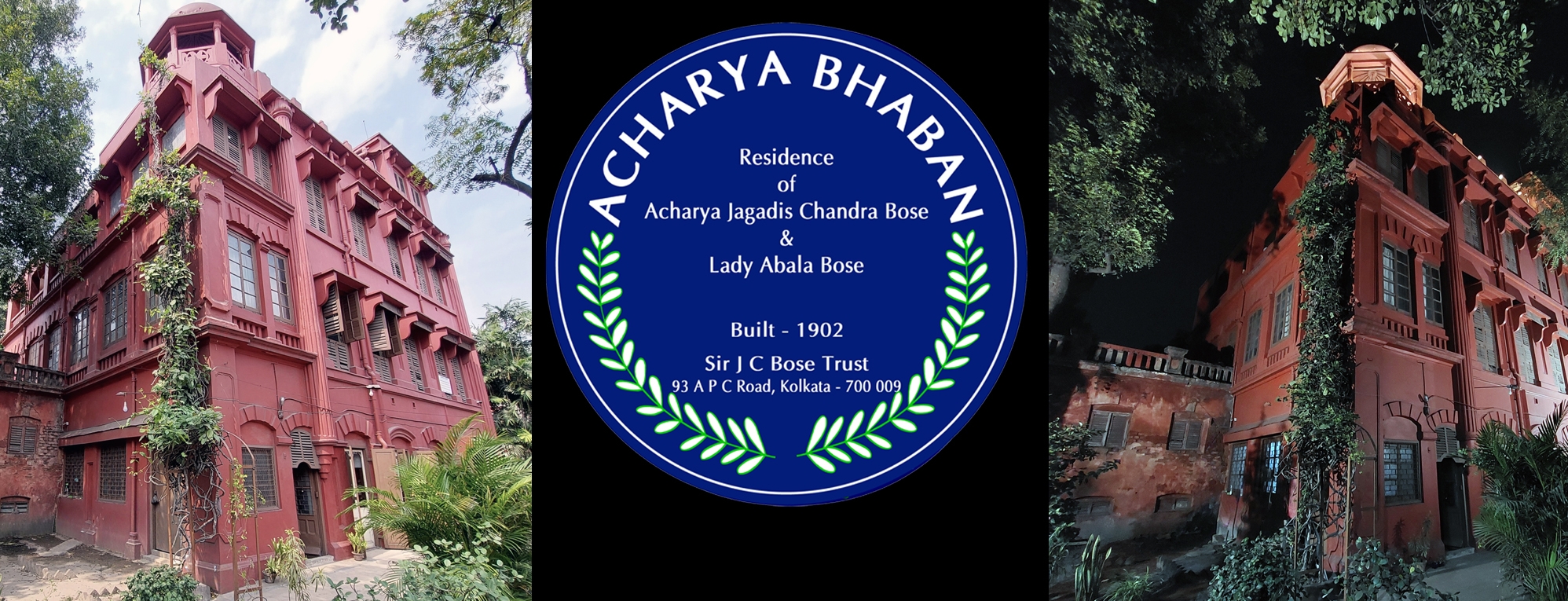
Acharya Bose, the Father of modern and experimental science in India, built Acharya Bhaban in 1902 on 93 Acharya Prafulla Chandra Roy Road, Kolkata where the Bose couple lived and worked till his last days. Many of his path-breaking experiments on responses of plants to various stimuli, radio waves, etc. were carried out in this house, Acharya Bhaban. This house was frequented by many stalwarts who played an active role in the Bengal Renaissance during the 19th and early 20th century, which has influenced immensely the whole of India. Acharya Bose and Lady Abala Bose, played hosts to many luminaries of the country in this house including Rabindranath Tagore, Swami Vivekananda, Sister Nivedita, Mahatma Gandhi, P.C. Ray, S.N. Bose, Meghnad Saha and interacted with the world luminaries including Albert Einstein, Bernard Shaw, Romain Rolland, Lord Rayleigh, Henry Cavendish. At present, Acharya Bhaban is managed by the Sir J C Bose Trust that Bose himself had created in 1931. However, Jagadis Chandra did not leave much money in the Trust; he spent nearly all of his personal assets in creating the Bose Institute. As a result, the trustees have found it difficult to maintain Acharya Bhaban.
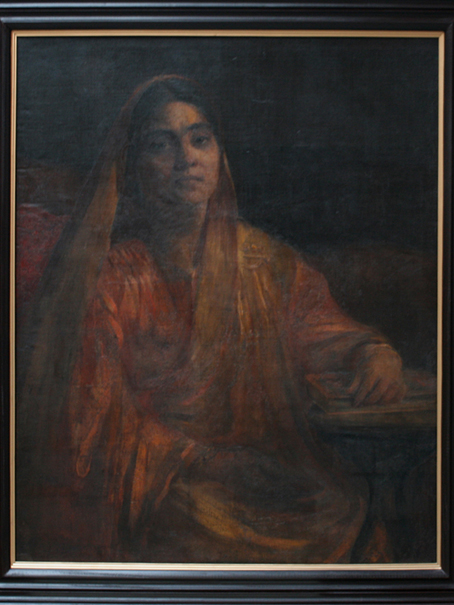
Lady Abala Bose
Lady Abala Bose was a pioneer in the field of Indian women's education and emancipation. She was a social & political reformer, an educationist, a visionary and one of the early feminists of India. Her contribution to women's education and widow alleviation is immeasurable. She was the secretary of the Brahmo Balika Shikshalay for 27 years (1910 - 1936}; introduced the Montessori Method to India; founder of: the Nari Shiksha Samiti (1919}, the Bengal Women's Educational League (1928) , the Sadhana Ashram for adult women's education (1925), Bidyasagar Bani Bhaban for women's teachers' training (1925}, Women's Industrial Co-operative Society in Kolkata (1935) and Sister Nivedita Adult Education Fund (1938). Through the Nari Siksha Samiti, Lady Bose set up about 88 primary schools and 14 adult education centres in the British province of Bengal.
Along with Sarojini Naidu and others she was one of the delegates to meet Edwin Montagu when he visited India to negotiate the Montagu-Chelmsford reforms, later known as "The Government of India Act 1919", which resulted in the right to vote for women in India and equal civil and political rights like men.
Post-independence, Lady Abala Bose's objective of spreading education and income-generating training programmes among the women of the underprivileged section of the society has evolved into a Government policy.
Lady Abala Bose was a founder member of the Governing Body, Bose Institute (Basu Vigyan Mandir) along with Tagore, Nil Ratan Sircar, J C Bose. Her contribution in shaping Bose Institute for research in inter disciplinary sciences cannot be overlooked/underestimated. She was also a founder member and Secretary of Sir J C Bose Trust.
When plans were evolved to convert Acharya Bhaban to a museum in memory of Acharya Bose - just as Albert Einstein's house in Berne or William Shakespeare's house in Stratford - on - Avon or Marie Curie's house in Warsaw were converted into museums - no funds were available to execute the plan. Acharya Bhaban is a treasure trove of paintings, murals and frescos, including the Bharat Mata by Nandalal Bose; scientific instruments fabricated by the ACHARYA himself; timeless furniture; books; and, personal memorabilia.
Because of lack of funds required for maintaining the priceless items in Acharya Bhaban, signs of wear and tear are conspicuous. Fortunately, the Ministry of Culture, Government of India, came to the rescue and provided a portion of funding to carry out some restoration and prevent irreversible wear and tear. However, a large quantum of money is still required to maintain Acharya Bhaban, which is essential for the preservation of our history of science and society. Most funding agencies, including philanthropic agencies, require the Trust to come up with a matching grant in order for them to provide a grant. It has, therefore, become essential to build a reasonably large corpus fund, of the order of Rs. 10 crores.
Trustees of Sir JC Bose Trust fervently appeal to all to donate generously so that the legacy of Sir Jagadis Chandra Bose and Lady Abala Bose, an important part of the history of modern Indian science can be preserved..
Donation, exempt from Income Tax under section 80G of the Income Tax Act (for Indian Donors), may be made by an account pay CHEQUE drawn in favour of "Sir J. C. Bose Trust Fund No. 111 or ECS transfer to the bank account of the Trust, the details of which are provided below.
Account Name: Sir J.C. Bose Trust Fund No.1
Account No: 11143636699
IFSC Code: SBIN0000001
State Bank of India, Kolkata Main Branch
Address: Samriddhi Bhavan. 1, Strand Road Kolkata-700001
Website: www.jcbosescienceheritagemuseum.org
Email: sirjcbose@gmail.com
Donations to the Sir J C Bose Trust are exempt from Income Tax under section 80G of the Income Tax Act (for Indian Donors).